Visiting timetableClosed
|Thursday, April 30, 2026Piazza Municipio, 80133 Napoli (NA), Italy
Back to history
military
Castel Nuovo Defenses – Battlements and Cannons
Trace the defensive thinking of Castel Nuovo in its battlements, cannon lines, and relationship to Naples’ harbor.
1/8/2026
15 min read
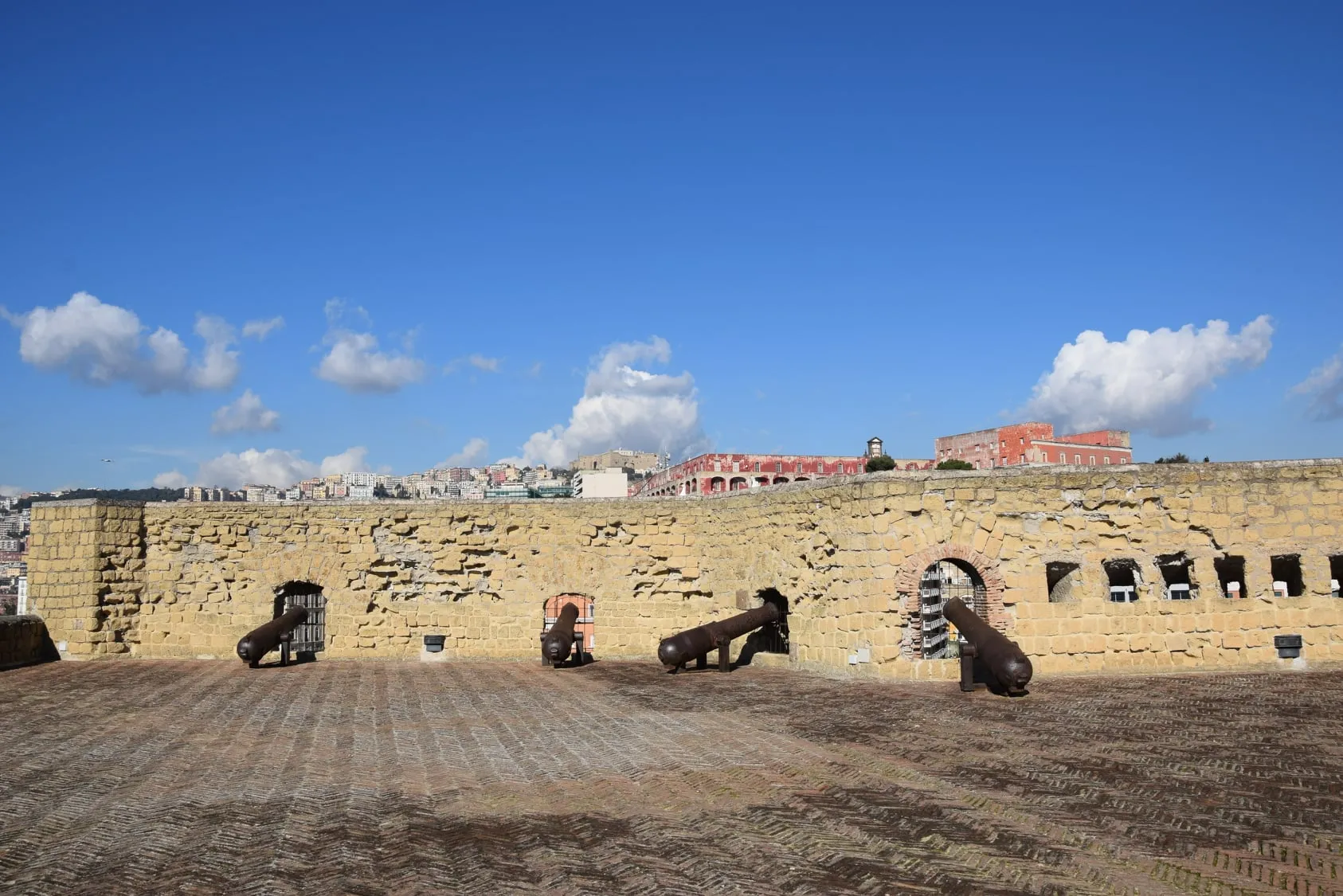
Walk the edges and imagine arcs of fire — the plan starts to speak.
Table of Contents
- Reading the line
- Towers, embrasures, and angles
- Artillery context (then and now)
- Harbor interface
- Sketch and thought exercises
- Safety and etiquette on ramparts
- Mini glossary and FAQ
Reading the Line
- Tower positions create overlapping fields; blind spots are minimized by curvature.
- Embrasures negotiate angle and cover — protection for the operator, reach for the cannon.
- Sea-side orientation anticipates naval threats and moving targets.
Towers, Embrasures, and Angles
- Stand near an embrasure and look out; track how the opening widens toward the interior.
- Note vertical vs horizontal slots and how they control field of fire.
Artillery Context (Then and Now)
- Early artillery shaped wall thickness and geometry.
- Later updates adapted positions without rebuilding whole towers.
- Today, lines read as history lessons rather than active defense.
Harbor Interface
- From ramparts, trace lanes where ships would align.
- Consider wind and current: moving targets change timing of shots.
Sketch and Thought Exercises
- Draw a rough plan and shade overlapping arcs from towers.
- Mark likely approach lines and imagine how defenders might respond.
Safety and Etiquette on Ramparts
- Stay within barriers; avoid leaning over edges.
- Mind footing on worn stone; keep bags secured against wind.
Image Highlights
Mini Glossary and FAQ
Glossary
- Embrasure: splayed opening for defensive fire.
- Field of fire: area that a weapon can cover from a position.
FAQ
Are original cannons still present?
Varies by site and period; displays may include originals or replicas. Focus on geometry and positioning.
Bottom Line
Defense and pageantry coexist — study the former to understand the latter’s stage.
About the Author

Military Reader
I built this to help you explore smarter—clear routes, better timing, and context that makes a fortress feel alive with ceremony and craft.
Tags
defense
battlements
cannons
Naples
Comments (0)
Leave a Comment
Loading comments...